
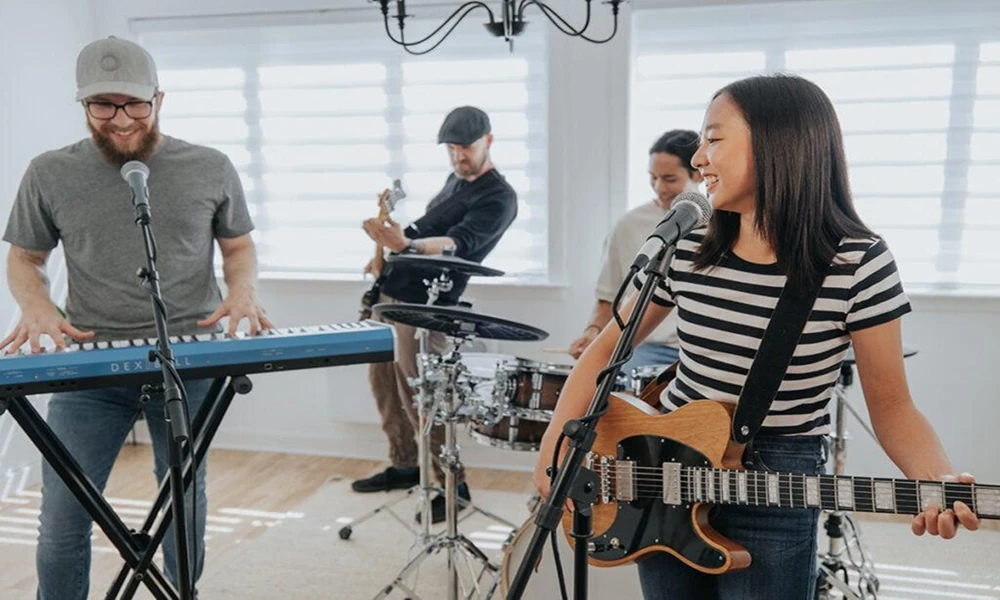

Becoming a skilled musician involves more than mastering scales, chords, or complicated arrangements. While technical ability provides an essential foundation, working in music also requires creativity, adaptability, communication, and an understanding of how musical projects come together.
A guitarist who plays flawlessly in a practice room may struggle during a recording session. A talented vocalist might find collaborating with a producer challenging. Even an experienced songwriter can face difficulties when managing deadlines or preparing for live performances.
Developing a wider range of skills can help musicians navigate these situations with greater confidence. Here are seven important areas worth exploring alongside regular instrument practice.
1. Develop Strong Listening and Collaboration Skills
Music is rarely created entirely in isolation. Whether performing in a band, recording with session musicians, or arranging songs with other artists, collaboration plays a central role in many musical projects.
Effective collaboration begins with active listening. Musicians need to recognize how their parts interact with other instruments and adjust their playing to support the overall arrangement.
A drummer, for example, may simplify a rhythm to create more space for a vocalist. Similarly, a guitarist might change chord voicings to complement a keyboard arrangement.
Practicing with other musicians encourages flexibility, patience, and musical awareness.
Joining local jam sessions, participating in ensemble rehearsals, and collaborating on small recording projects can help develop these abilities.
2. Understand the Basics of Music Production
Modern musicians often benefit from understanding what happens after a performance reaches the recording stage.
Basic familiarity with recording software, microphones, audio interfaces, and editing techniques can make it easier to communicate ideas and participate effectively in studio sessions.
Musicians do not necessarily need to become professional audio engineers. However, knowing how to record a clean demo, organize audio tracks, and recognize common recording problems can be extremely useful.
Start by experimenting with a digital audio workstation and recording short musical ideas. Listen critically to the results and identify areas that need improvement.
This practical knowledge can also help musicians prepare material for collaborators before entering a professional recording environment.
3. Strengthen Your Understanding of Music Theory
Music theory offers a shared language for discussing harmony, rhythm, melody, and musical structure.
Although musicians can create compelling work without extensive theoretical training, understanding fundamental concepts can make communication and creative problem-solving easier.
For instance, knowing chord progressions can help a songwriter experiment with different harmonic possibilities. Understanding rhythmic subdivisions can improve timing during rehearsals and recording sessions.
Rather than studying theory only through textbooks, apply each concept directly to an instrument or composition.
Analyze a favorite song, identify its harmonic structure, and experiment with alternative arrangements.
Connecting theory with real musical examples makes learning more practical and engaging.
4. Choose Learning Environments That Connect Different Skills
Independent practice is valuable, but musicians can also benefit from structured environments that combine technical instruction with practical experience.
Workshops, collaborative projects, guided rehearsals, and feedback from experienced instructors can reveal areas for improvement that are difficult to identify alone.
For students interested in developing performance, production, songwriting, and industry knowledge together, contemporary music schools can provide useful examples of how different musical disciplines are organized within formal education programs.
However, choosing an educational pathway should involve more than comparing course titles.
Consider whether a program includes opportunities for collaboration, practical assignments, individual feedback, and exposure to different musical styles.
It is also worth examining the time commitment, learning format, total cost, and relevance of the curriculum to personal career goals.
The most suitable learning environment is one that encourages consistent growth while supporting the musician’s individual creative direction.
5. Build Confidence Through Live Performance
Practicing privately and performing for an audience require different kinds of preparation.
Live performances introduce unpredictable elements, including unfamiliar acoustics, equipment problems, and the challenge of maintaining concentration under pressure.
Developing stage confidence usually requires repeated exposure to performance situations.
Begin with manageable opportunities such as open-mic nights, small community events, or informal performances with fellow musicians.
Record performances when appropriate and review them afterward. Pay attention to timing, transitions, audience communication, and overall musical consistency.
Preparation is equally important. Rehearse complete sets rather than individual songs, and practice recovering smoothly from mistakes.
These habits help musicians become more comfortable adapting when a performance does not unfold exactly as planned.
6. Learn Professional Communication and Project Management
Musical ability alone does not guarantee that a collaborative project will run smoothly.
Clear communication, reliability, and organization are important when coordinating rehearsals, recording sessions, performances, or creative partnerships.
Musicians should develop the habit of confirming schedules, understanding expectations, and preparing required materials in advance.
For example, sharing song arrangements before rehearsal allows collaborators to prepare their parts efficiently.
Keeping organized project files also helps prevent confusion when working with producers, engineers, or other artists.
Professional communication includes responding respectfully to feedback and discussing creative disagreements constructively.
These habits contribute to productive working relationships and make it easier to participate in future collaborations.
7. Develop Adaptability Across Musical Styles and Situations
Musicians who explore different genres, techniques, and creative approaches can expand their artistic possibilities.
A rock guitarist might benefit from studying jazz harmony, while a vocalist focused on pop music could explore rhythmic phrasing from soul or funk.
Learning unfamiliar styles challenges established habits and encourages musicians to approach their instruments from new perspectives.
Adaptability also involves responding to unexpected situations.
During a rehearsal, a musician might need to change a song’s key, simplify an arrangement, or follow a different tempo.
Practicing these adjustments can make musical interactions more productive.
One useful exercise is to choose a familiar song and reinterpret it in another style. Experiment with changes to rhythm, instrumentation, harmony, and dynamics.
The objective is not to master every genre but to develop the flexibility needed to approach new musical challenges creatively.
Conclusion
Preparing for professional musical work requires a balance between technical development and practical experience.
Listening carefully, understanding recording fundamentals, studying theory, performing regularly, and collaborating effectively all contribute to a more versatile skill set.
Musicians can develop these abilities through independent study, mentorship, formal education, and real-world projects.
Rather than attempting to improve everything simultaneously, identify two or three areas that would make the greatest difference to your current goals.
Set achievable milestones, seek constructive feedback, and revisit your progress regularly.
Consistent development across complementary skills can help musicians become more capable collaborators, confident performers, and adaptable creative professionals.